Brand relationships come in all shapes and sizes, but marketers tend to focus on loyal brand “marriages,” missing opportunities to relate to customers who may see their brand as a best friend, a fling, or even an adversary, says Boston University’s Susan Fournier.
At MSI’s February 2014 conference, “Brands in the Balance: Managing Continuity and Change,” Fournier and John Wittenbraker of GfK discussed how managers can overcome such myopia and build stronger customer-brand relationships.
While many managers embrace the idea of relationship marketing, the practice of customer relationship management has devolved to customer profitability management, she points out. “A lot of relationship marketing is IT-led and IT-enabled and while these professionals know how to manage data they do not necessarily understand relationships. Bribing with cash incentives, locking-in, giving a membership card. Is that a relationship?”
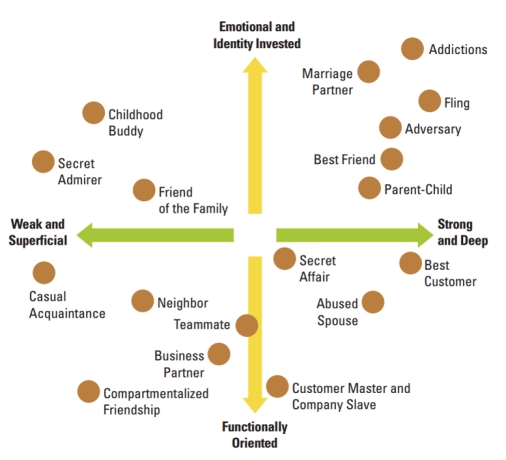
Firms need to refocus on managing the relationship equity in their total portfolio of brand relationships, Fournier says. They will find that their consumer—brand relationships are complex and multi-dimensional. Some may be functionally-oriented, some superficial and fleeting, and some emotional and social. Each type of relationship has different norms and expectations. “If you learned your brand was a ‘secret affair’ for a sizable segment, for example, as we learned with Cheetos, ‘Sex in the City,’ Wal-mart, and National Enquirer, you are going to think twice about your advertising messages and marketing campaigns. A fashion brand marketed as a ‘best friend’ versus a ‘fling’ brand is going to have a different brand story, identity, and feel.”
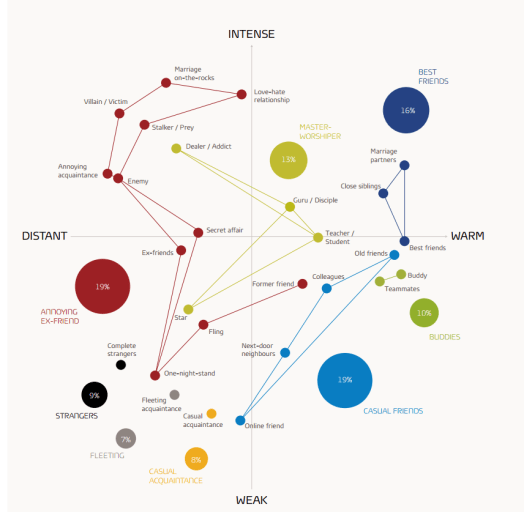
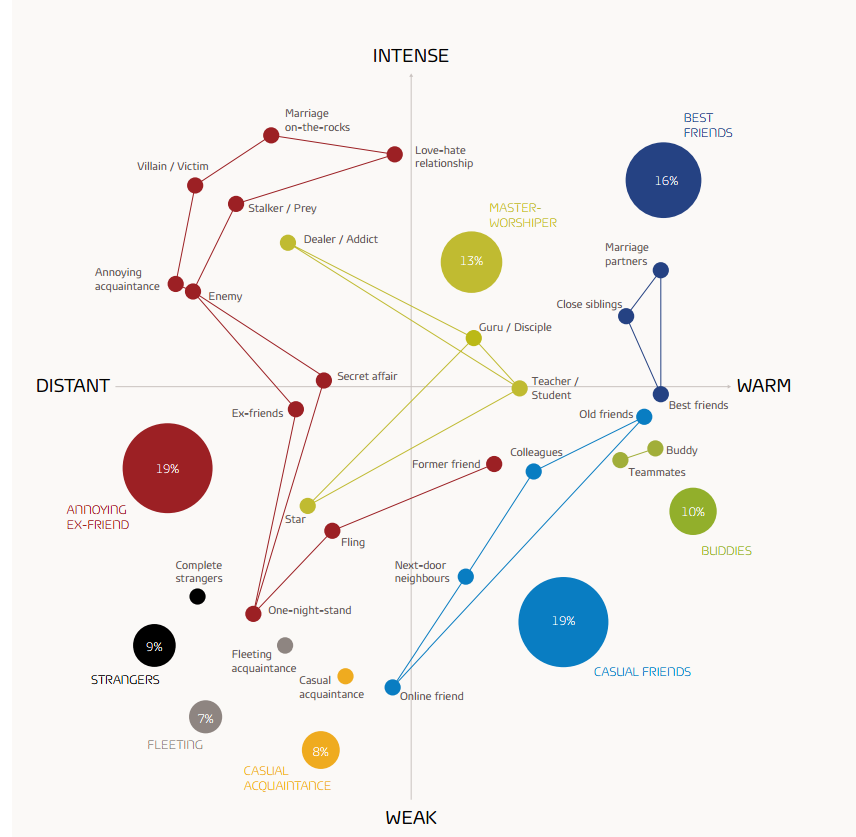
Fournier cautions marketers not to forget about managing negative relationships, which her research shows comprise on average 45% of consumers’ relationships with brands. “If a customer of the New York Philharmonic feels they are in a stalker-prey relationship, you better develop a plan to manage that. And you might think twice about sending Development after them for donations, which is the knee-jerk reaction of CRM.”
“There is profit potential in all types of relationships,” says Fournier. “The trick is to understand the specific relationship contract and the implicit rules that govern consumers’ brand interactions.”
While managers claim credit for profitable relationships, they rarely look inward to learn why some relationships go bad. For example, companies often reward good customers with discounts and special treatment and permit them to break rules. These “best customers” become costly to serve and may even eventually be “fired” by the firm. “Firms need to pay attention to their signals. All signals. Not just the ones in the marketing plan.”
“There is profit potential in all types of relationships,” says Fournier. “The trick is to understand the specific relationship contract and the implicit rules that govern consumers’ brand interactions. You have to play by the rules.”
Rather than seeking simply to maximize revenue in a journey to gold customer status, firms should segment their customers by relationship type, Fournier suggests. With this portfolio map, they can determine which segments to target, and develop strategies by reverse-engineering best and worst relationships.
“You can know a purchaser by collecting purchase and demographic data, but to establish a relationship you really need to understand what makes the person tick,” Fournier says. “As marketers, we tend to think it’s all about the brand—no, it’s all about people’s lives and if you are lucky, your brand will come into those lives.”
http://www.msi.org/articles/is-your-brand-a-partner-a-best-friend-or-a-secret-affair-for-your-customers/
Click to access BaCE-How-Deep-is-your-love.pdf
Click to access Putting%20the%20R%20Back%20into%20CRM_Sloan%20Management%20Review_April%202011.pdf


 Tianfeng Sun --- Sky, Breeze, and Sun --- Freedom.